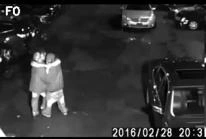
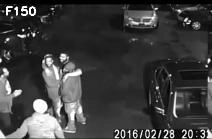
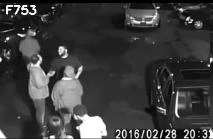
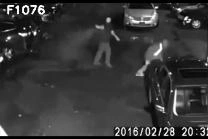
Mine the teacher
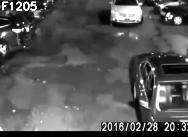
Query Qwen2.5-VL-32B with overlapping 2-second windows at 4 FPS. Normalize the Yes/No answer probabilities into soft anomaly targets.
“Does any anomaly event occur in this video? Answer Yes or No.”
 BMVC 2026 / LANCASTER, UK

Adaptive Sampling for VLM-guided
Unsupervised Video Anomaly Detection
* Corresponding author · 3 Yonsei-KIST Convergence Research Institute
Long videos need continuous attention. They do not need a large vision-language model on every frame.
BUSTER is a label-free framework that distills a vision-language model (VLM) into a lightweight recurrent student. The student learns both anomaly scores and when to inspect the stream more densely, using a Scout-and-Burst sampling policy.
Semantic pseudo-labels from a Qwen2.5-VL-32B teacher guide training without manual anomaly annotations. A rank-aware objective teaches the student to separate confident anomalous and normal moments. At inference, the student monitors the stream at low frame rate, revisits suspicious intervals at higher resolution, and reserves expensive VLM reasoning for selected burst segments.
Across UCF-Crime, XD-Violence, and ShanghaiTech, the paper reports strong unsupervised detection performance. On UCF-Crime, BUSTER matches dense 8 FPS detection while processing 53.2% of the frames.
Learn offline. Monitor efficiently.
Explain on demand.
Query Qwen2.5-VL-32B with overlapping 2-second windows at 4 FPS. Normalize the Yes/No answer probabilities into soft anomaly targets.
Combine frozen LanguageBind features with their temporal differences. Train a recurrent student using score matching, ranking, and temporal smoothness.
Switch from 4 to 8 FPS around high-score intervals. Merge candidates, allocate a bounded frame budget, and ask the VLM for segment-level explanations.
Figures 1–2 and every qualitative panel from the paper and supplementary PDF, plus one separately labelled LaTeX source variant. Select a collection or browse them all.
Main paper · Figure 2
VLM pseudo-label mining, student distillation, and on-demand reasoning over burst-selected evidence.
Descriptions within qualitative figures are the original Qwen2.5-VL-32B outputs, including errors and failure cases. These illustrations are not additional benchmark measurements. The original figure colours are preserved.
The offline model uses a bidirectional LSTM and smoothing. Causal online inference uses a unidirectional recurrent model. Benchmark scores for both settings are shown separately below.
Detection, explanation, and hallucination.
Distinct measurements. Explicit sources.
Standard test split · 290 videos · frame-level ROC-AUC (%) ↑
| Method | Supervision | Mode | AUC (%) ↑ | Δ vs. prior unsupervised |
|---|---|---|---|---|
| GCL | Unsupervised | Offline | 74.20 | — |
| DyAnNet | Unsupervised | Offline | 79.76 | Reference |
| LAVAD | Zero-shot | Offline | 80.28 | Not applicable |
| BUSTER Ours | Unsupervised | Offline | 86.30 | +6.54 pp |
| BUSTER Ours | Unsupervised | Online | 85.50 | +5.74 pp |
Source: main paper, Table 1. Selected comparisons; the paper contains the full table. Scores are paper-reported, not independently reproduced here. Deltas use the strongest prior unsupervised result for each metric; pp = percentage points.
Measured against the dense 8 FPS baseline on UCF-Crime.
Table 2 · Efficiency analysis ↗Event visibility (%) ↑ · UCF-Crime test set
| Refinement policy | Event visibility |
|---|---|
| Holmes-style allocation | 65.2% |
| Holmes-style + threshold | 83.3% |
| Scout-and-Burst | 93.3% |
The major event is visible in the selected evidence, among explanations overlapping ground-truth events. This measures evidence visibility, not the factual accuracy of every generated claim. The count of eligible explanations is not specified in Table 16.
Anomalous interpretations on normal videos (%) ↓
| Refinement policy | Normal Hall. | Generated |
|---|---|---|
| Holmes-style allocation | 39.3% | 94 / 150 |
| Holmes-style + threshold | 0.0% | 0 / 150 |
| Scout-and-Burst | 0.0% | 0 / 150 |
Denominator: all 150 normal test videos. Scout-and-Burst and the thresholded baseline generate no explanations on these videos; 0.0% does not establish hallucination-free generated explanations.
Both tables: supplementary, §B.8 / Table 16. Controlled policy comparison across all 290 UCF-Crime test videos, with Qwen2.5-VL-32B as the reasoning VLM. These are paper-specific explanation metrics on a public benchmark.
Model. Default teacher and reasoning model: Qwen2.5-VL-32B. Frozen feature encoder: LanguageBind. Student: 2-layer LSTM, hidden dimension 256, 3.19M parameters; online recurrent variants are reported separately.
Throughput. Main-paper FPS values are analytical estimates from measured module latencies. LanguageBind throughput was measured on one NVIDIA RTX A6000. The detection-only value excludes burst-time VLM reasoning. With explanations, Table 2 estimates 351.1 FPS at 10% burst load and 109.0 FPS at 100% burst load; these are different load assumptions.
Attribution. Every number here is transcribed from the supplied paper or supplement. No additional experiments, official reproductions, or new controlled extensions were executed for this website. Reproduction score: not run; new controlled-method score: not applicable.
Version differences. The main benchmark table reports 78.30 AUC for offline ShanghaiTech. Table 4 separately reports 78.32 for its LSTM variant. We use Table 1 consistently for cross-method benchmark comparisons.
Original demonstrations from the supplementary material.
Scores, sampled evidence, and VLM descriptions together.
Qualitative examples, not a new evaluation set. Model-generated descriptions in the videos may contain errors. Clips are reproduced from the supplied supplementary package and do not run live inference.
Better temporal evidence does not remove every perceptual or reasoning error.
A short action involving a small target can remain difficult for the teacher to perceive, even when the surrounding interval is available.
An explanation may focus on a visible aftermath instead of the decisive action. Detecting an anomaly does not guarantee a correct causal account.
Teacher priors and domain shifts affect results. A visually grounded description can also differ from a dataset’s specific event category.
@misc{ahn2026buster,
  title  = {BUSTER: Adaptive Sampling for VLM-guided
            Unsupervised Video Anomaly Detection},
  author = {Ahn, Deok-Hyun and Choi, Yonghun and Han, Jae-Ho
            and Kim, Ig-Jae and Kim, Haksub},
  year   = {2026},
  note   = {Project manuscript}
}
Manuscript citation. Final proceedings metadata and DOI are not included in the supplied materials.
Supported by the KIST Institutional Program (26E0062) and KIPoT’s “Development of a Mobile-Platform-Based Solution for Proactive Safety Services” (RS-2025-25393280). J.-H. Han was additionally supported by the MSIT ITRC program (IITP-2026-RS-2022-00156225) and NRF (RS-2024-00415812).